
Pakistan Tourism

Shah Rukn-e-Alam Multan: A Spiritual and Architectural Masterpiece

Nestled in the heart of Multan, one of Pakistan’s oldest cities, the shrine of Shah Rukn-e-Alam stands as a testament to faith, history, and architectural brilliance. For many tourists on a Pakistan tour, this mausoleum is more than just a religious site — it’s a deeply spiritual space, a cultural landmark, and a heritage gem. Whether you’re a devout pilgrim, a history buff, or someone exploring tourism travel in South Asia, Shah Rukn-e-Alam offers a rich, immersive experience rooted in centuries of Sufism and architectural tradition.

Built between 1320 and 1324 under the reign of the Tughluq dynasty, it has endured the test of time, thanks to careful restoration by local caretakers and the Punjab Tourism Department. This guide explores everything a tourist needs to know about visiting the shrine — its history, architecture, significance, and travel tips — as well as practical information for planning a trip. Whether you’re planning a travel to tourist destinations in Punjab or a wider travel and tour across Pakistan, here’s why this site should be on your list.

Pakistan tourism punjab tourism department tourism department punjab tourism travel pakistan for tourists pakistan tour tour pakistan pakistan tourists tourism website in pakistan

History and Legacy of Shah Rukn-e-Alam

Who Was Shah Rukn-e-Alam?

Shah Rukn-e-Alam (born 26 November 1251, died 3 January 1335) was a revered Sufi saint of the Suhrawardiyya order. He was born in Multan and later took spiritual leadership after his grandfather, the saint Baha-ud-Din Zakariya. His life was marked by devotion, compassion, and the pursuit of spiritual wisdom, which drew disciples from all corners of the region. Today, he remains a symbolic pillar of Sufism in Punjab and beyond.

Construction of the Mausoleum

The mausoleum was commissioned by Ghiyas-ud-Din Tughluq, who later became the founder of the Tughluq dynasty. Built between 1320 and 1324 CE, it was possibly intended as a dynastic tomb, but was instead gifted to the saint’s descendants and followers.

Historical and Cultural Significance

Over the centuries, the shrine has become a center of pilgrimage. The annual Urs (death anniversary) draws over 100,000 devotees, making it one of the most important spiritual gatherings in the region. The tomb is also listed in the tentative list for UNESCO World Heritage status, underscoring its universal cultural value. 

Architectural Brilliance

A Three-Tier Octagonal Design

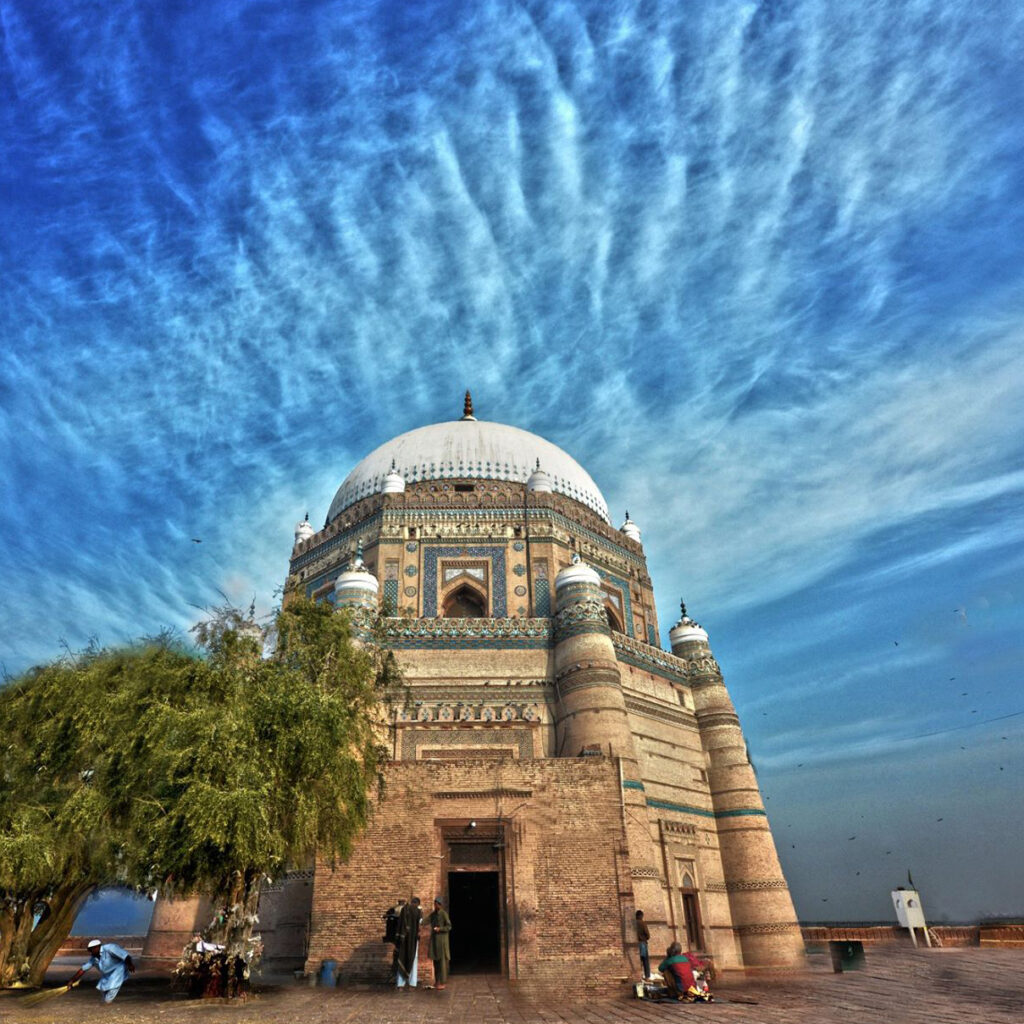
One of the most striking aspects of the shrine is its three-tier structure, built in an octagonal plan — a pioneering example on the Indian subcontinent.  The lower tier features massive, battered red-brick walls, supported by tapering corner towers or buttresses that reflect Tughluq military-style architecture. 

The second level is a smaller octagon, accessible by staircase, surrounded by a parapet wall with crenellations that evoke fortress design. Topping it all is a large hemispherical dome, which can be seen from a distance, making the shrine a visible landmark in Multan’s skyline.

Tilework, Wood, and Calligraphy

The mausoleum’s exterior is richly ornamented with blue and white glazed tiles, arranged in geometric, floral, and calligraphic patterns. The red brickwork is interspersed with carved brick and wooden elements — shisham wood beams and decorative motifs give the structure depth and texture.

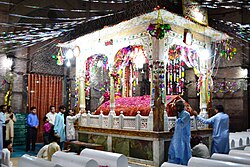
Inside, the mihrab (the niche that indicates the direction of Mecca) is crafted from finely carved wood and is considered one of the earliest examples of its kind in the region. The sarcophagus of Shah Rukn-e-Alam lies slightly off-center, surrounded by graves of his 72 descendants, symbolically echoing the 72 martyrs of Karbala.

Restoration and Conservation

In the 1970s, the Auqaf Department of the Government of Punjab conducted a major restoration, repairing damaged brickwork, replacing shattered tiles, and restoring woodwork.  The project also involved training local craftsmen — especially Kashigars (tile makers) — to revive traditional Multani tile work and wood carving techniques. This effort earned recognition from the Aga Khan Award for Architecture. 

Spiritual and Cultural Importance

A Place of Pilgrimage

For many tourists and pilgrims, visiting Shah Rukn-e-Alam is more than a sightseeing trip — it’s a spiritual journey. The annual Urs draws huge numbers, featuring qawwali sessions, devotional chanting, and communal prayers. The atmosphere is intense yet soulful, and many visitors report a deep sense of peace and inspiration.

Cultural Identity of Multan

Multan is often called the “City of Saints,” and the shrine of Shah Rukn-e-Alam plays a central role in defining that identity. Its architectural style, tile work, and Sufi legacy contribute significantly to the historical character of the city. The tourism department Punjab, as part of its broader strategy, highlights this shrine as a key heritage site — promoting both tourism travel and cultural preservation.

Craftsmanship and Local Economy

The shrine’s maintenance and restoration have also promoted local craftsmanship. Traditional artisans — tile makers, wood carvers, brick workers — benefit from restoration programs. This creates sustainable heritage-led tourism and helps preserve Pakistan for tourists beyond mere economic value.

Visiting Shah Rukn-e-Alam: Practical Guide

How to Reach

  • By Road: Multan is well-connected by road. From Lahore, it’s about 340 km via the M-3 and M-4 motorways and then N-5. 

  • By Air: Fly into Multan International Airport, which is only around 6–7 km from the shrine.

  • By Train: The Multan Railway Station is a short ride from the tomb and has regular connections with Lahore, Karachi, and Islamabad.

  • Public Transport: Local rickshaws, taxis, and ride-hailing services (like Uber/Careem) are available from the airport or train station.

Best Time to Visit

The ideal season to visit Multan and Shah Rukn-e-Alam is from November to February, when the weather is cool and pleasant. During the Urs festival (usually in Jumada al-Thani), the shrine is especially vibrant, but also more crowded.

Guidance for Tourists

  • Dress Code: As a sacred site, modest clothing is required.

  • Photography: Allowed in many areas, though visitors should be respectful and check for any restricted spaces, especially during prayers.

  • Local Guides: Hiring a knowledgeable local guide can greatly enhance your travel and tour experience — they provide historical context, tell stories of Sufism, and can show hidden architectural details.

  • Amenities: There are basic facilities, but it's smart to carry water, especially in warmer months.

Nearby Attractions and Things to Do

While in Multan, tourists can enrich their trip by visiting other nearby sites and exploring cultural experiences.

Multan Fort (Qasim Bagh Fort)

The shrine sits within the Qasim Bagh Fort area, offering visitors a chance to explore ancient fortifications, ramparts, and historic ruins. The elevated mound provides panoramic views over the city.

Hussain Agahi Bazaar

A bustling local market close to the shrine, this bazaar is perfect for souvenir shopping. You’ll find Multani blue pottery, embroidered textiles, traditional jewelry, and sweets like sohan halwa. This is a favorite spot for tourism travel enthusiasts looking to take home a piece of local culture.

Shrine of Baha-ud-Din Zakariya

Just a short distance away, this shrine belongs to Shah Rukn-e-Alam’s grandfather and is itself an important Sufi destination. Many tourists often combine both shrines in one pilgrimage or cultural visit.

Pakistan tourism punjab tourism department tourism department punjab tourism travel pakistan for tourists pakistan tour tour pakistan pakistan tourists tourism website in pakistan

Shah Rukn-e-Alam in the Context of Punjab Tourism

Role of the Punjab Tourism Department

The Punjab Tourism Department plays a pivotal role in preserving this shrine and promoting it on national and international tourism websites in Pakistan. By integrating the shrine into heritage tourism plans and regional development strategies, they help maintain its relevance for Pakistan tourists and pilgrims alike.

Tourism Development and Sustainability

Efforts to conserve the mausoleum also support local livelihoods. Training programs in traditional tile work and wood carving help sustain tourism travel while preserving crafts that might otherwise fade. This aligns with broader goals of heritage tourism: cultural preservation, economic benefit, and meaningful visitor experiences

Marketing to International Visitors

For those planning a tour Pakistan trip, the shrine is often featured in cultural tour packages highlighting Sufi shrines, heritage monuments, and the spiritual heart of Punjab. It is especially recommended in itineraries aimed at Pakistan for tourists who wish to explore beyond popular cityscapes like Lahore and Islamabad.

The shrine of Shah Rukn-e-Alam is not just an architectural wonder — it’s a center of spirituality, history, and cultural continuity. For tourists planning a tour Pakistan, it offers a meaningful stop that combines faith, art, and local life. As part of the heritage circuit promoted by the Punjab Tourism Department, the shrine helps connect visitors with the soul of Multan and the heart of Sufi tradition.

As you plan your trip — whether you're drawn by tourism travel, spiritual pilgrimage, or heritage curiosity — consider making this shrine a cornerstone of your itinerary. Its majestic dome, soothing ambiance, and rich legacy are sure to leave a lasting impression.

Conclusion

Exploring Shah Rukn-e-Alam is an unforgettable part of any Pakistan tour or travel and tour adventure. To make your journey smoother, more meaningful, and deeply enriching, explore expert guides, curated packages, and personalized itineraries at https://ptcptourism.com/. Start planning your Multan pilgrimage or heritage trip today — let us help you experience the spiritual and architectural majesty of one of Pakistan’s most revered tourist landmarks. Visit ptcptourism.com now and unlock the story of Shah Rukn-e-Alam on your travel itinerary.

Frequently Asked Questions

Because he was a major Sufi saint of the Suhrawardiyya order and his mausoleum is a masterpiece of Tughluq-era architecture, drawing devotion and tourists alike.

Between 1320 and 1324 CE under Ghiyas-ud-Din Tughluq.

You can drive (approx 340 km), take a train, or fly into Multan International Airport and then take local transport.

The cool season (November–February) is ideal. The shrine comes alive during the annual Urs festival.

Yes — Multan Fort (Qasim Bagh), the Baha-ud-Din Zakariya shrine, and the nearby bazaars are well worth a visit.
Pakistan tourism punjab tourism department tourism department punjab tourism travel pakistan for tourists pakistan tour tour pakistan pakistan tourists tourism website in pakistan
Shopping Basket